Family History
When we tell the story of a person's life, we often talk about key moments: when they were born, when they went to school, when they got married. These are life events, and we use specific words and dates to describe them.
In this activity, you will learn how to say and understand years and dates, how to use prepositions of time correctly, and how to talk about past events using the past simple.
By the end of this activity, you will be able to organise events, build sentences with years and dates, and talk about life events in chronological order.
Days
Click on each day to hear its pronunciation.
- Days always start with a capital letter in English.
- We often use the word "on" before days.
Months
Click on each month to hear its pronunciation.
- Months always start with a capital letter in English.
- We often use the word "in" before months.
Years
Read about Rose's life. Click on the years to hear how they are pronounced.
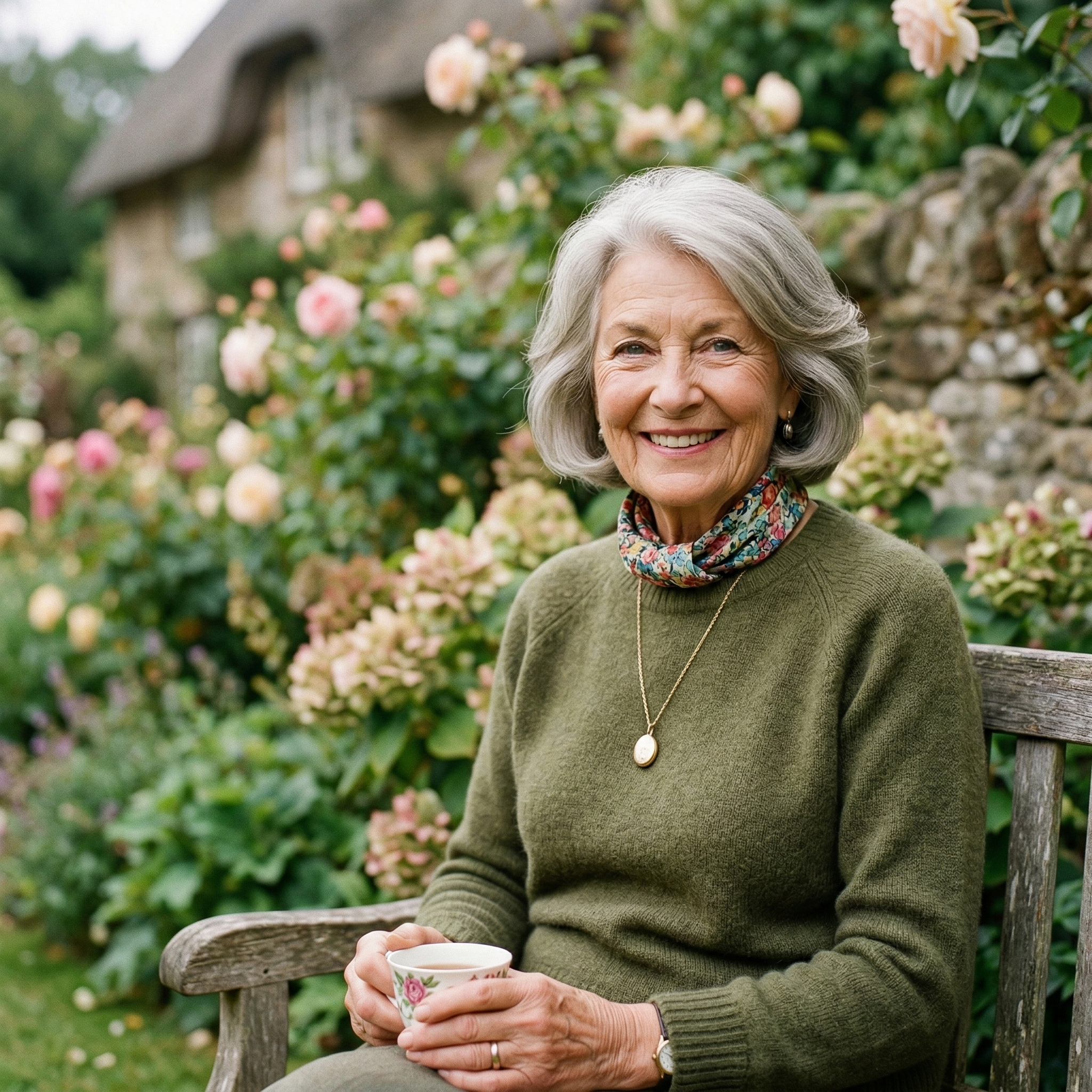
- Rose was born in 1952 in a small village near Oxford.
- She moved to London in 1975 to study medicine at university.
- In 1981 , she started her first job as a doctor at the city hospital.
- She published her first book about patient care in 1994 .
- Rose retired in 2018 and now spends her time gardening.
- Years are often separated in two parts. Example: 1985 > 19|85 > nineteen eighty-five.
- Years from 2000 to 2009 are often pronounced "two thousand and...".
- We often use the word "in" before years.
Prepositions of Time
We use different prepositions depending on how general or specific a time is. Check the table below.
| Preposition | Specificity | Used for... | Example |
|---|---|---|---|
| in |
General
Large periods of time
|
Months | They met in September. |
| Years | I was born in 1993. | ||
| Seasons | We travel in summer. | ||
| Parts of the day | I study in the morning. | ||
| on |
Specific
A single day
|
Days of the week | Class is on Monday. |
| Specific dates | She was born on March 14th. | ||
| Named days | She called on my birthday. | ||
| Holiday days | No work on Christmas Day. | ||
| at |
Very Specific
An exact point in time
|
Exact times | Class starts at 9:00 AM. |
| Specific moments | He arrived at midnight. | ||
| Holiday periods | We celebrate at Christmas. | ||
| Age | She retired at 65. |
For holidays, use "on" for a single day (on Christmas Day), and use "at" for the whole holiday period (at Christmas, meaning the season).
Reading Comprehension
Read the following text and choose the best alternative for each question below.
My Grandmother Rose
My grandmother, Rose, was born on the 3rd of July, 1952, in a small village called Bampton, near Oxford. She was the youngest of three children. Her father worked at the local post office and her mother was a nurse. She grew up with lots of books and a big garden full of flowers.
My grandma always wanted to be a doctor. In 1963, when she was eleven years old, she visited her mother at the hospital and knew that was what she wanted to do. She worked very hard at school. In 1970, she finished secondary school with very good results. But she did not go to university straight away. First, she worked for two years at a pharmacy near her home to save money.
In September 1972, she started her medical degree at University College London. It was a long course — six years. She graduated in June 1978. Our whole family was so proud. Later that year, in October 1978, she met my grandfather, James, at a hospital conference in Edinburgh. They got married in April 1980.
Rose started her first job as a doctor at St Thomas' Hospital in London in 1981. It was a busy job, but she loved it. In 1983, my mum, Sarah, was born, and my uncle Tom came along two years later in 1985. That same year, she began to specialise in paediatrics — that means looking after children. She became one of the best doctors in her department.
My grandmother always said that a good doctor needs to talk clearly with patients. In 1994, she wrote her first book, Talking to Young Patients. It was a guide for doctors who work with children. The book sold over 40,000 copies and was translated into five languages. A lot of people read it.
In November 2005, something scary happened. My grandfather James had a serious heart attack and stayed in hospital for three months. Luckily, he got better. After that, Rose decided to work fewer hours and spend more time with her family. James retired in 2007, and they left London and moved to a quiet house in the Cotswolds.
My grandma retired from medicine in 2018, after 37 years as a doctor. Now she spends her time in the garden, reading, and writing. In 2022, she published a book about her life called A Life in Good Hands. I read the whole thing in one weekend.
Today, she is 73 years old. Every morning she gets up early, waters her roses, and reads the newspaper. She always says to me: "It is never too late to start, Lily. I waited until I was twenty to go to university, and I never looked back."
Where was Rose born?
In which year did Rose start her medical degree at university?
How many years did Rose study medicine at university?
Where did Rose meet her husband, James?
What area of medicine did Rose specialise in from 1985?
In what month did James have his heart attack?
How many years did Rose work as a doctor before she retired?
Why did Rose wait until she was twenty to go to university?
Question 1 of 8
My Life Events
Now it is your turn. Write at least 5 important events from your own life. Use the past simple to describe each one.
Your timeline will appear here.
Add the first event above to get started.
Activity Complete!
You've completed "Family History". Here's what you've practised: